
Harry Freedman
Shylock's Venice
The Remarkable History of Venice's Jews and the Ghetto
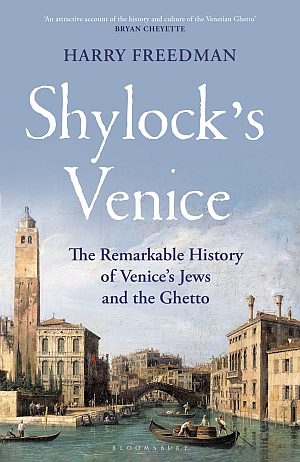
New York: Bloomsbury Continuum, 2024, ISBN: 978-1399407274
Reviewed by Juana Torralbo Higuera1
In this book, Freedman takes readers to meet illustrious historical subjects who left significant records of Jewish history during the Venetian Republic, also known as La Serenissima, which began in the fifth century and ended in 1797. The author clearly states that his study does not address the life of most Venetian Jews, but instead focuses on the traces left behind by privileged individuals constituting an elite engaged in cross-cultural exchange between Jews and Christians. His main argument and scholarly contribution is that the Enlightenment of the eighteenth and nineteenth centuries took place in Venice two centuries earlier. And although, “there was still a long way to go but the word emancipation hung tentatively in the air” (p. 203); this was especially true toward the final decades of the Republic in the eighteenth century.
In the eleven chapters of this monograph, the author shows how, for the first time in Christian Europe, an exchange between Jewish ideas and those recovered from antiquity during the Renaissance gave rise to referential works in Jewish ethics, philosophy, literature, and music, among others. The impact of these works also intersected with Venice’s vibrant printing industry and prosperous environment, cementing its status as a center of scholarly life. Freedman contextualizes the significance of this history as he reminds readers that a similar cultural phenomenon had indeed previously happened in Muslim Iberia from where Ponentine or Western Jews hailed, many of whom found refuge in Venice after their expulsion from the peninsula.
The book maintains a tone that strikes a balance between scholarly and narrative, appropriate for recounting biographical stories while still making a critical use of sources and acknowledging their limitations. One of the author’s strengths is how seamlessly he is able to integrate sufficient historical, cultural, and geographical context to avoid an anachronistic and detached reading of an English-speaking twentieth-first century reader without overwhelming them with excessive details. The author also includes biblical references when relevant and offers commentary on subjects that can be misinterpreted by readers not versed in the early modern period. Names of prominent scholars and their works are provided for those drawn to learn more on the subject. Original Italian terminology is retained throughout, enabling scholars to use these terms for future explorations.
An interesting example of the book’s accessibility lies in its treatment of segregation by trade, nationality, and religion, generally, and the urban history of Jewish isolation in Venice, specifically. In providing context for various topics, Freedman discusses both the separation of Jewish inhabitants from the Christian population and the internal divisions within the Jewish community which included the Tedeschi, from German-speaking lands, the Levantine, from the Balkan regions of the Ottoman Empire, and the Ponentine, fleeing Iberia. In this way, readers better understand how Venice became, at least for two centuries, a sufficiently safe place for many Jews seeking immediate refuge after violent uprisings such as the War of the Mantuan2 Succession and the Khmelnytsky Uprising,3 or a safer alternative during periods of increased religious persecution in places like Antwerp and Ferrara. The Republic also allowed for, and even expected, Jewish self-government granting an unprecedented degree of autonomy.
However, as Freedman makes clear, the fact that the Republic of Venice was a safe enough place for various Jewish populations did not mean that privileges of residency were not constantly at risk of not being renewed and had to be collectively renegotiated with the Venetian government which was primarily driven by economic interest. Despite this ongoing precarity, the book’s focus remains on highlighting the diversity among Venice’s Jewish population and particularly on demystifying the view of the ghetto as a place of total physical and intellectual isolation. The emphasis is on revealing the ghetto’s porous cultural boundaries, which while mostly benefitting privileged individuals sparked a literary and cultural revolution. This shift left a lasting mark on Jewish scholarship and made possible a cultural production that engaged both Jewish and Christian sources and employed scientific methods to interrogate religious sources. One of the most appealing aspects to Freedman’s contribution for scholars working in Jewish Studies or adjacent fields featured in this volume is the wide range of works by “Renaissance Jews,” as the author calls them. Though the main focus is on Jewish works, occasional references are made to works by Christian authors, such as Francesco Giorgi’s De Harmonia Mundi, likewise shaped by the collaborative interreligious spirit of the times.
Shylock’s Venice is written with a clear appeal to a British audience or, more broadly, to readers interested in British literature, particularly the Shakespearean world. Several passages in this 247-page volume present loose thematic connections between the history of antisemitism in Britain, especially Shakespeare’s play The Merchant of Venice, its performance history and its adaptations, and Jewish history of Venice from the sixteenth through the eighteenth century. These include the suggestion that Shakespeare’s Shylock may have been inspired by Anselmo del Banco and his family, as well as the connection drawn between the scandalous divorce of Henry VIII and Catherine of Aragon and the work of Elijah Menahem Halfon, a Jewish scholar based in Venice.
Despite the effort to weave together the historical context of Elizabethan England and the history of antisemitism with Venetian Jewish history, these threads might have benefitted from being more tightly brought together in a concluding section. Another stylistic concern is that the introduction of historical characters sometimes lacks follow-up risking reader fatigue from too many names that may not be essential to the book’s main argument. Footnotes might have helped differentiate between major figures and those included as supplementary.
Overall, Freedman’s Shylock's Venice offers a broad overview of the history of Jewish scholarly and cultural production in the Republic of Venice presented mostly in a chronological order with sufficient background for newcomers to the subject. Freedman offers a rich selection of stories making readers sparking curiosity about remarkable biographies and scandals of the time. His writing style is effective in crafting an engaging narrative without romanticizing Jewish life preserving the awareness of the peril and uncertainty that defined the Jewish experience under the Republic of Venice.
1 Juana Torralbo Higuera is a literary and cultural scholar of German-speaking Jewry based at Washington University in St. Louis. Currently, she is working on her dissertation project on depictions of Eastern Jewish characters in German-language literature published in the interwar period. Her areas of research specialization are migration to and from German-speaking countries, the history of antisemitism in German-speaking countries, multilingualism and intercultural communication in Europe.
2 The Mantuan War or the War of the Mantuan Succession (1628–1631) took placed in northern Italy and was related to the Thirty Years' War. Jewish populations living in Mantua sought refuge in Venice.
3 As explained by Freedman, the Khmelnytsky Uprising broke out in 1648 under the leadership of the Cossack warlord Bohdan Khmelnytsky targeting the Polish nobility who governed Ukraine. Many Jews, employed by Polish landowners to manage feudal estates that exploited Ukrainian peasants, became victims of the revolt. An estimated 20,000 of the roughly 40,000 Jews living in Ukraine were killed and an unknown number elsewhere in the Polish-Lithuanian Commonwealth. Thousands were seized by Tatar raiders and sold into slavery in the markets of Istanbul (170-171).