
A Little Ladino Poem
By Leonard Stein1
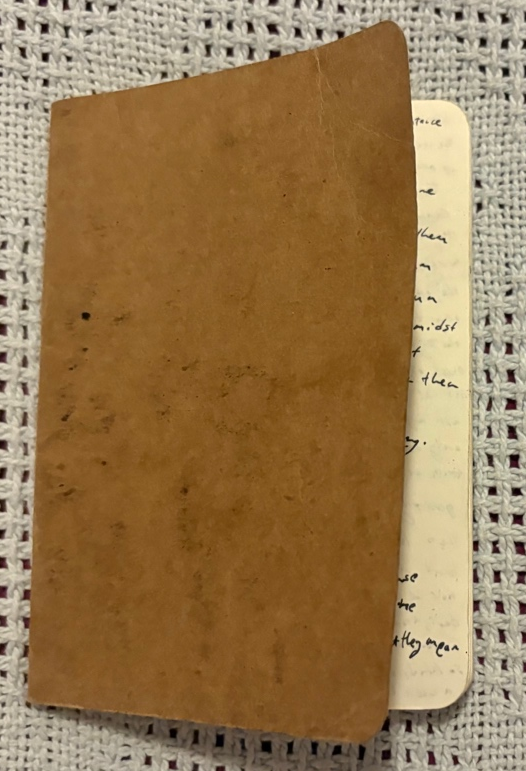
Years ago, my God, how many years has it been now, I lost a small notebook. When we were living in the old neighborhood in Beersheba, I would step out before dawn to write in this pocket-sized notebook. The writing wasn’t serious, only little things, the beginning of things as the city awakened. Now one day, I wrote a little poem, an homage to Ladino proverbs, and this would haunt me to the ends of reason. You see, it was shortly after I wrote it that I lost the damn notebook and couldn’t for the life of me find it. What was first an inconvenience avalanched into an excavation of all that I possessed: pockets undone, drawers reopened, sofas overturned. You see, I had remembered bits of the Ladino poem. I strangely started yearning for it. Months passed, my family moved to our new place, children grew, wars began, and I still, here and there, would search for that little notebook with the little Ladino poem.
Oh, that it would turn up! Where could it possibly have gone? Suffice to say, the loss unfurled. I wrote poems about this poem. It became a mythological text about, what? Unreliable memory, ancestral fragments, palimpsests written and rewritten, voices we hold onto until we can’t hear them anymore. This little poem, this little page of an idea for a poem, had become so precious to me through its absence that I resolved if I ever did find it, if the notebook ever fell back to my hands, I would send it, surrender the words to Sephardic Horizons. A proper end to the journey, no? You can see where this is going.
Today, my teenage daughter, cleaning and preparing for her own fancy dinner party, came across the notebook. It had been between sheet music, of all places, in a bag inside of a bag with recording equipment. I swooped through the pages of the little notebook like a bird aiming for its food, my hands shaking that I would read it again. Dear reader, do you know this feeling? Can you feel my hunger? And yet, the poem was not there! That specific one, it was not in the lost notebook. Lost again! Had it flown away with the rest of my hopes? The other pages recognized, but not the Ladino poem! Why, when I had so longed for its return? A lover jilted, searching for clues or a note to make sense of the senseless. How could it have left me?
It hadn’t, of course. For I had been too eager in the discovery and didn’t realize how, over the years, I formed a picture of what the old Ladino poem looked like. I had pictured the way my handwriting filled the page, the way it left indented spaces to form stanzas that did not exist. I was looking for a version I created in its absence. A memory trick. It had looked nothing like that.
But here it was! I cried again, having not cried in so long. Something precious, something that turned itself inside out. I know this sounds trivial. We lose things every day, as Elizabeth Bishop would say. When you read this, you might wonder if these very words about the poem are even true. Perhaps it is a convenient story of loss. But how can I tell you, whoever you are, what seeing that page meant? It was a melody of return. It was a glimpse of the lighthouse when I had been, when I still am, here in Beersheba, unmoored.
I kissed the page as if it were inherited text, as if it were my Egyptian grandmother, now long passed, beginning to share her wisdom with me, the kind I could not hear when she was around because she was too bitter or I was too young. A poem is not my grandmother. It is just a piece of paper. And yet, I can hear her now saying things I know she never said, in her voice, no, a kinder voice. She said them. So maybe this is her poem, or my Bulgarian grandmother’s, in between her dirty jokes while playing bridge. The lines were there, heard or not. So, anyway, I look at my beautiful daughter, organizing her dinner party, and I tell her, “My dear, I’ve been looking for this for years. I could not find this anywhere. Anywhere.” I thanked her, with a full heart, wrote down these words, and sent it away. This was what was on the page:
We walk through air aware of so little
But can we dream in new tongues
Are these jots recorded beyond the page
Seen and carried like the poems we keep
Someone calls you but you’re away on another line
If I sang this as a Ladino folk song
Could I invent old sayings imagined as my family’s
And what would they say
El ruido del sarten ya te kita el ambre
The sound of the sizzling pan already quenches your hunger
Las primeras notas de tu kante de amor podriyan ser de un nanni
The first notes of your favorite love song might be a lullaby
Ay bozes i ay ladridos de perro
There are voices and there are barks
Los antepasados tambien vieron el sol i kreyeron ke era muevo
The ancestors saw the sun as well and thought it was new
Syempre egzisten pajinas vasias
There are always empty pages
La tierra se akodra despues de la tempesta
The land remembers after the storm
Shushuros de tu nombre te va a persegirte en tu kama de muerte
Whispers of your name will haunt you at your deathbed
Las puntas de una kuedra son un lugar malo para dentenerte
The ends of a rope are a poor place to hold onto
El reflo esta serka a la palavra
The breath is close to the words
…
Te olvidas, ama despues te akodras
You forget, but then you remember
1 Leonard Stein is a literary scholar, musician, and writer. He currently lectures at Tel Aviv University and Ben-Gurion University, having received his PhD at the University of Toronto Centre for Comparative Literature and Anne Tanenbaum Centre for Jewish Studies. His research focuses on Sephardic literature, early Modern English literature, and the intersections between music and literature. He is also a songwriter and composes music to medieval Jewish poetry. The poem has been reviewed and corrected by Rachel Amado Bortnick (mersi muncho!).