
La Baruga Del Nono
By Randolph Alberto Acosta Díaz
eskura komo la noche
Ke maçuka piel
Gusta de ke la namores
komo ninyo komiendo azúker
Ke miras mi ijiko?
Ke miras mujer?
kon esta baruga te kerido
kon esta baruga puedo azer todo bien kerer
Esta baruga es bobeska
Esta baruga emkarinya
Esta baruga no desleka
Esta baruga besa komo ninya
Author: Randolph Alberto Acosta Díaz
Santo Domingo, Dominican Republic, 16 February 2022
The author welcomes linguistic and orthographic guidance while wishing
to preserve the poem's original voice, imagery and emotional simplicity.
What the poem seeks to express
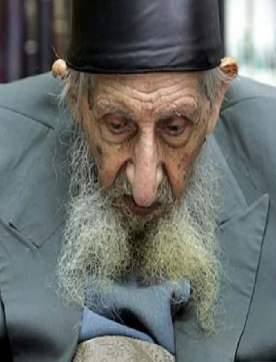
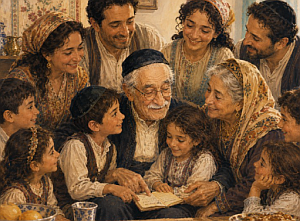
La baruga del nono is, at heart, a poem about family memory. The grandfather is presented as a central figure in Sephardic family life: the person who tells stories, offers advice, sings old songs, makes jokes, takes the children for walks, and quietly transmits language, customs and ways of seeing the world. The poem chooses an intentionally small and almost ordinary physical detail - the grandfather's wart - as the emotional point from which those memories are recovered.
The wart is therefore not the true subject of the poem. It is a memory marker. A feature that might seem trivial to anyone elsebecomes unforgettableto achild becauseit belongsto someonedeeply loved.
Years later, remembering that small mark can call back the grandfather's voice, his expressions, his stories, his humor, his advice and the feeling of being safe beside him. The poem tries to show how the smallest features of the people we love can become inseparable from our most cherished memories of them.
First stanza - The detail becomes memory
The opening stanza looks at the wart almost through a child's eyes. It is dark and visible, yet it is not treated with disgust. Instead, the child's affection transforms an imperfection into something familiar and beloved. This is the moment in which a tiny physical feature begins to acquire emotional meaning.
Second stanza - The grandfather within the family
The poem then moves from observation to relationship. The grandfather is no longer simply being looked at: he belongs to a living circle of children, grandchildren and spouse. His face is the face from which stories, advice, jokes and family expressions are received. The wart becomes one of the details through which the child recognizes not merely a face, but the presence of the grandfather himself.
Third stanza - The detail becomes the person
In the closing stanza, the wart is personified. It seems to love, remain, kiss and show tenderness. In reality, these are the qualities of the grandfather. The physical mark and the remembered person have become inseparable. What survives in memory is not the wart alone, but everything attached to it: affection, childhood, family and the transmission of a world from one generation to the next.
The Sephardic dimension of the poem lies not in historical exposition, but in intergenerational transmission. A family language survives because it is carried by people: a grandfather teaches, a child remembers, and the descendant later uses that same language to preserve the grandfather in words. In that sense, Ladino becomes both inheritance and memorial.
Copyright by Sephardic Horizons, all rights reserved. ISSN Number 2158-1800